Hundreds of processors claim to serve high risk merchants. A handful are genuinely transparent about pricing. Here is how to tell the difference, and what the real math looks like.
There is a quiet epidemic running through the high risk payments industry. It has nothing to do with fraud, chargebacks, or card network fines. It has everything to do with the gap between what merchants believe they are paying and what they are actually paying.
Processors operating in high risk verticals, from adult content platforms to subscription models to crypto exchanges, often bury the true cost of acceptance inside technically accurate but practically unintelligible fee structures. The result: merchants build entire financial projections on numbers that are fundamentally wrong.
At Ireowo, we have spent over a decade sitting across the table from business owners who are blindsided by their first settlement statement. This article exists so that does not happen to you.
Why Transparency in High Risk Payment Processing Is Rare
The high risk payment processing market is structurally opaque. Acquiring banks set tiered pricing based on dozens of risk variables. Independent sales organizations (ISOs) and payment facilitators then layer their own margins on top. By the time a fee schedule reaches a merchant, it can contain five or six distinct cost components, each with its own calculation logic.
The complexity is not always intentional deception. Processing international card payments through a regulated European acquirer involves genuine operational costs: interchange, scheme fees, currency conversion, fraud tooling, compliance overhead. But the problem is that merchants are rarely given a clear, consolidated view of what all those costs add up to before they sign.
The core issue: Most merchants evaluate a processor quote by looking at the headline percentage. The headline percentage is rarely the number that lands in their bank account.
Decoding the IC++ Pricing Model
The most common pricing structure in the high risk space is IC++, and it is also the most misunderstood. Let us break it down precisely.
What "IC" (Interchange) Actually Means
Interchange, the first component in IC++, is not a fee paid to Visa or Mastercard. It is a fee paid to the card issuing bank. When a customer pays with their Barclays Platinum Rewards Visa, the interchange on that transaction goes directly to Barclays, not to Visa.
This distinction matters because interchange rates are highly variable. They depend on:
- Card type (debit vs. credit)
- Card tier (standard vs. premium vs. corporate)
- Card geography (domestic vs. cross-border)
- Reward program attached (cashback, miles, etc.)
- Transaction type (card present vs. card not present)
A basic domestic debit card might carry interchange of 0.10 to 0.20%. A foreign-issued premium rewards credit card used for a card-not-present transaction, exactly the type common in high risk ecommerce, can carry interchange of 1.50 to 2.50% or more. Visa publishes its interchange rate tables publicly; the complexity alone illustrates why blanket estimates mislead merchants.
Scheme Fees: The Second "+" in IC++
The second cost layer consists of card scheme fees, what Visa and Mastercard actually charge for the use of their payment rails. These include assessment fees, authorization fees, cross-border fees, and various service-specific charges.
Mastercard publishes a comprehensive overview of merchant fees on its website. The key point: scheme fees are not static. They are periodically revised, and certain transaction types carry surcharges that can meaningfully affect your effective rate.
The Acquirer Margin: The Third "+" in IC++
The final component is the acquiring bank's margin, the actual profit the processor earns. In a competitive low-risk environment, this margin might be 0.10 to 0.30%. In a high risk merchant account, it is typically 1 to 3% or higher, depending on the vertical, chargeback history, and volume.
The honest math: When you receive a quote of "IC++ 5%," that 5% is the acquirer's margin only. Interchange and scheme fees are added on top, and those costs are not predictable in advance because they depend entirely on the cards your customers use.
A Real-World Fee Breakdown: What €100 Processed Actually Yields
Let us take a concrete scenario. A high risk merchant receives this offer: IC++ 5%, Rolling Reserve (RR) 10% at 180 days, plus €0.25 per transaction.
A reasonable first guess: €100 processed → €94.75 received. Here is what the actual settlement math looks like:
| Fee component | Amount |
|---|---|
| Gross transaction amount | €100.00 |
| Acquirer margin (5%) | − €5.00 |
| Interchange (estimated avg. ~1.2% — variable) | − €1.20 |
| Scheme fees (~0.30%) | − €0.30 |
| Per-transaction fee (€0.25) | − €0.25 |
| Authorization fee (~€0.15 per attempt) | − €0.15 |
| Rolling reserve withheld (10% × 180 days) | − €10.00 |
| Liquid cash actually received today | ≈ €83.10 |
That is not €94.75. That is roughly €83.10, and it assumes no settlement fees, no statement fees, and average interchange. If your customer base skews toward premium reward cards or cross-border transactions, the real number could be lower still.
Businesses that model cash flow on the headline rate and not on the fully-loaded effective rate routinely hit liquidity crises within their first quarters of processing. The internet is not short of case studies of high risk merchants who entered insolvency because their working capital assumptions were built on the wrong number.
Get a clear picture of your real processing costs
Our team will walk through your specific business model and give you an honest, fully-loaded cost estimate before you sign anything.
Start processing payments for your high risk business → ✓ You pay nothing unless approved.Hidden Fees That Processors Rarely Highlight
Beyond the IC++ structure, high risk merchant accounts commonly carry additional charges that appear only after onboarding. Understanding these in advance is a non-negotiable part of evaluating any processing solution for high risk businesses.
Authorization Fees
Every authorization request, whether the transaction is approved, declined, or abandoned, typically triggers a fee. At €0.10 to €0.20 per attempt, this cost scales rapidly with transaction volume and any decline rates you experience.
Chargeback Fees
High risk merchant accounts carry elevated chargeback fees, typically €15 to €50 per dispute regardless of outcome. In verticals with historically elevated dispute rates, this line item can represent a meaningful percentage of gross revenue.
Settlement and Statement Fees
Some processors charge per-settlement cycle fees, daily or weekly statement generation fees, and even minimum monthly fee floors that apply when your volume falls below a threshold. These fees are legal, common, and rarely emphasized in initial quote discussions.
Early Termination and Reserve Release Delays
Contracts in the high risk space frequently include early termination penalties, sometimes expressed as a flat fee, sometimes as a percentage of anticipated annual volume. Rolling reserve release schedules can also extend beyond the stated window if a risk event occurs during the release period.
Our recommendation: Before signing any high risk payment processing agreement, request a full fee schedule in writing, not a summary slide. Ask your processor to enumerate every line item that could appear on a settlement statement. If they are reluctant to provide this, treat that reluctance as meaningful data.
Not sure what fees are hidden in your current processing contract? We will read it with you, free of charge, no commitment required.
Review my contract →The Rolling Reserve: How It Silently Drains Your Working Capital
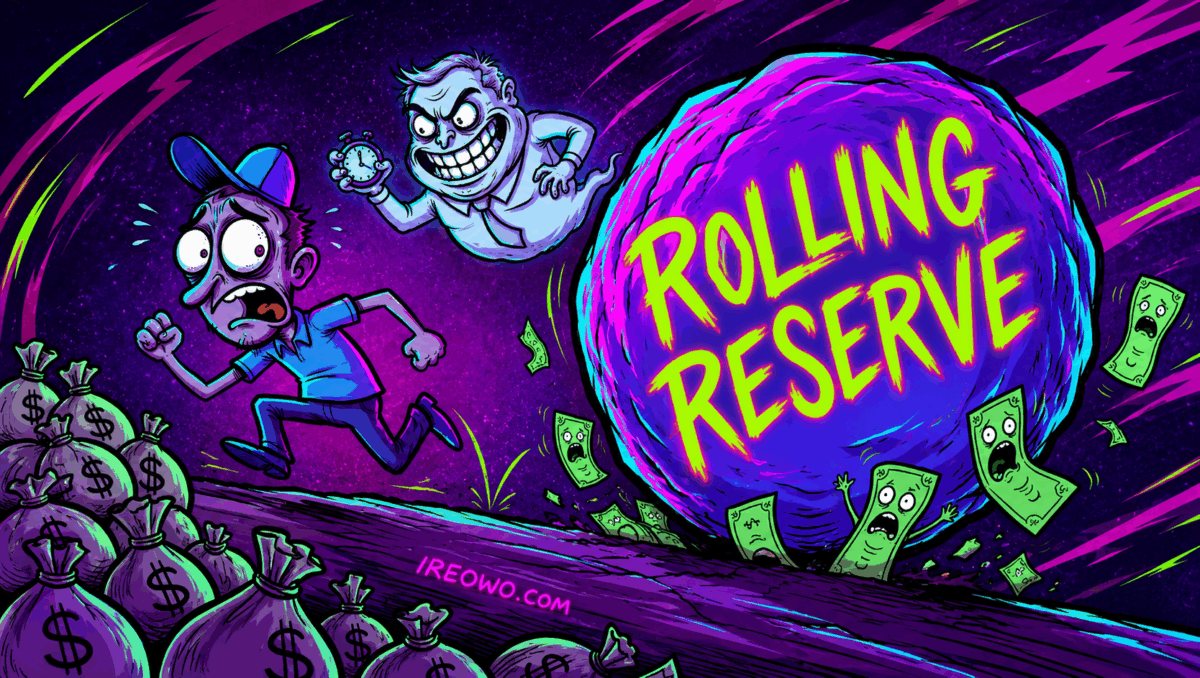
The rolling reserve is one of the most consequential and least-understood features of a high risk merchant account. It is not a fee, it is withheld capital. But its practical effect on cash flow can be more damaging than any fee line item.
In a standard 10% / 180-day rolling reserve arrangement, the acquiring bank retains 10% of each settlement cycle and holds it for six months as a risk buffer. The capital is eventually returned (assuming no chargeback or fraud events trigger a forfeit), but for the first six months of processing, you are effectively financing 10% of your gross volume at zero return.
For a business processing €100,000 per month, that means €10,000 per month, or €60,000, is locked in reserve before the first tranche is released. If your business was capitalized assuming full revenue availability from month one, that reserve can be the difference between sustainable operations and a cash crunch.
Reserve percentages and holding periods vary. Lower-risk profiles within the high risk category, those with clean chargeback histories, longer operating track records, and regulated business models, may qualify for reduced reserves over time. That negotiation is one of the most valuable things an experienced payment advisory firm can do for a high risk merchant.
The Other Side of Transparency: What Merchants Must Disclose
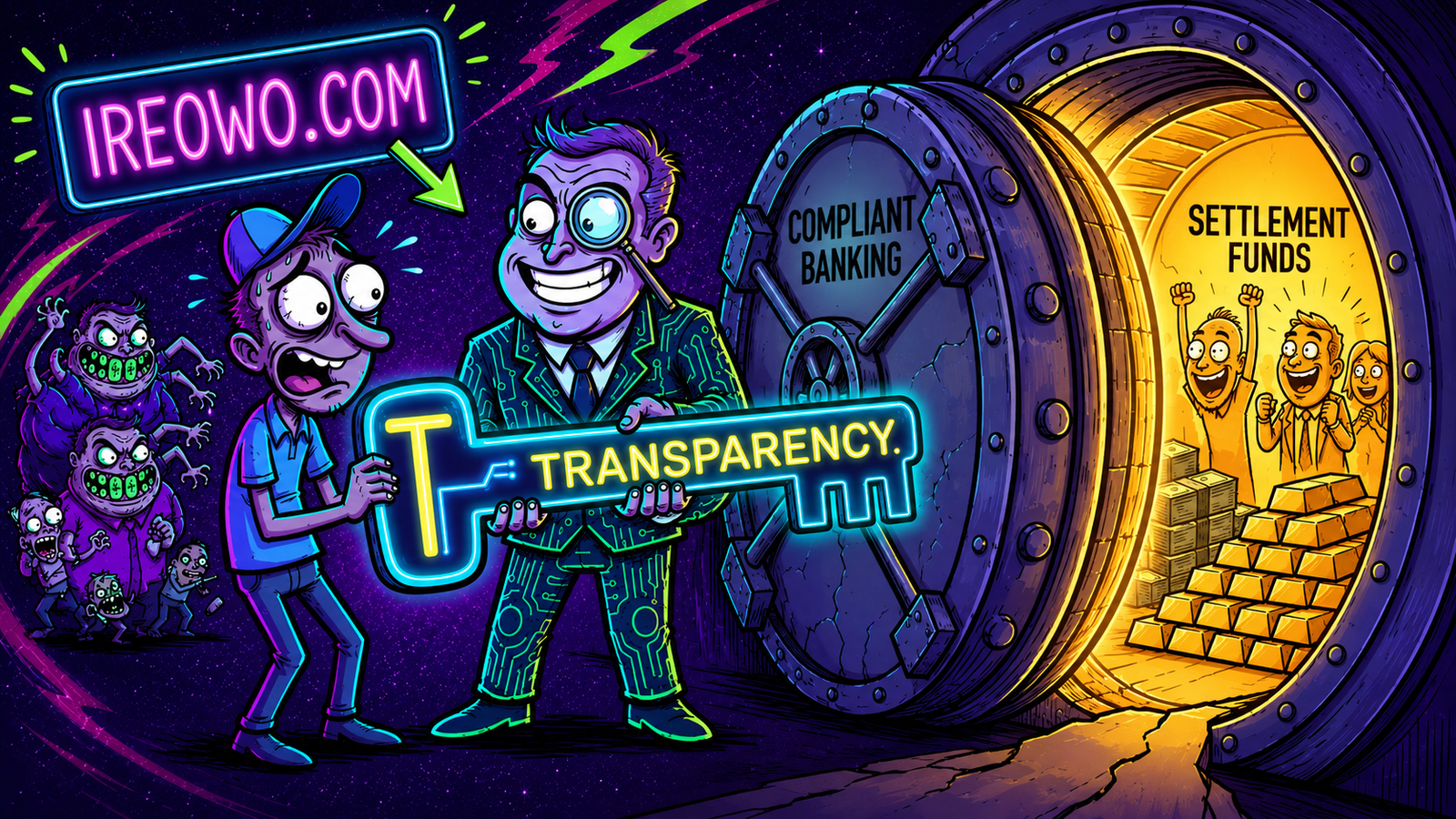
Transparency in high risk payment processing is not a one-way obligation. It runs in both directions, and the consequences of failing to meet it as a merchant are severe.
Transaction Laundering and Merchant Cloaking
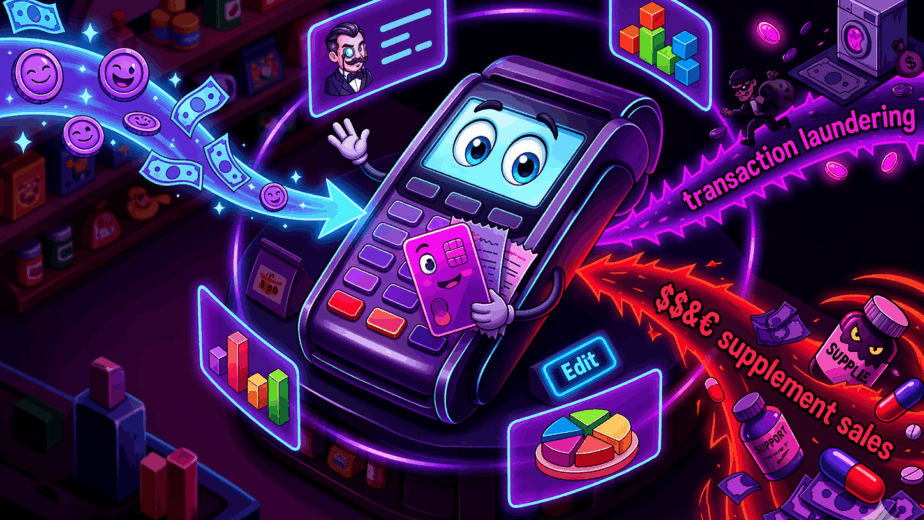
One of the most common attempts to circumvent high risk processing requirements is transaction laundering, also called merchant cloaking. This occurs when a merchant operating a high risk business (adult content, gambling, nutraceuticals, etc.) applies for a merchant ID using a low-risk facade business, then routes high risk transactions through the approved account.
This is not a gray area. Card network regulations explicitly prohibit it, and acquiring banks employ underwriting analysts who review dozens of merchant files daily. They are experienced in identifying inconsistencies between stated business models and actual transaction patterns. Behavioral analytics, website monitoring, and chargeback pattern analysis all contribute to detection.
The consequences of transaction laundering are severe: termination of the merchant account, placement on the MATCH/TMF list (which prevents obtaining any acquiring relationship globally for up to five years), card scheme fines ranging from thousands to hundreds of thousands of euros, and potential criminal liability depending on jurisdiction.
The MATCH list, Mastercard Alert to Control High-Risk Merchants, is maintained cooperatively across the acquiring ecosystem. An entry on that list is not jurisdiction-specific. It follows a business and its principals globally. Visa operates a parallel system. For context on the regulatory framework governing these obligations, the Visa Core Rules and Visa Product and Service Rules document is publicly available.
Why Merchants Are Reluctant — and Why That Reluctance Is Understandable
We understand why merchants in certain high risk verticals are hesitant to be fully transparent during the application process. Card network regulations have grown increasingly strict. Some legitimate business models operate in regulatory gray zones or face reputational risk. The instinct to present a sanitized version of the business is human and, in some cases, has been encouraged by brokers who prioritize placement over compliance.
But experienced underwriters are not naïve. The analysis tools available to acquiring banks, including AI-assisted transaction monitoring, website crawlers, and cross-bank data sharing on flagged merchants, mean that misrepresentation is increasingly likely to be detected, and increasingly likely to carry consequences that exceed any short-term benefit.
Honesty Unlocks Better Solutions
The counterintuitive reality of the high risk payments market is that full transparency about your business model almost always produces better outcomes than selective disclosure. An experienced payment advisory team, one that knows the risk appetite of multiple acquiring banks and understands what documentation and framing each requires, can structure a compliant application for nearly any legal business model.
The qualifying word is legal. If your model is legal in its operating jurisdiction, transparency is an asset, not a liability.
We sit on your side of the table
We are not the acquiring bank. We do not charge hidden fees or commissions layered on top of bank rates. We help you understand exactly what you are agreeing to, and we only earn a fee when your application is approved.
Get your high risk merchant account application reviewed → ✓ You pay nothing unless approved.Industries We Work With
The Ireowo team has structured compliant payment processing solutions for merchants across a wide range of high risk categories. Provided the underlying business is legal in its operating jurisdiction, our experience covers:
- Adult content & entertainment
- escort & companion agencies
- Online dating platforms
- AI-generated content platforms
- Online casinos & gaming
- Cryptocurrency services
- CBD & nutraceuticals
- Vaping & e-cigarettes
- Travel agencies & OTAs
- Subscription billing models
- Retail & ecommerce
If your documentation is incomplete or you are unsure how to structure your banking application, that is exactly the work we do. An honest intake conversation with our team costs nothing and typically identifies the path forward within the first call.
What to Look for in a Transparent High Risk Payment Processor
Whether you work with Ireowo or another firm, here are the indicators that separate genuinely transparent high risk payment solutions from ones that will surprise you at settlement time.
A complete, itemized fee schedule in writing
Every fee, interchange pass-through, scheme fees, authorization fees, chargeback fees, settlement fees, monthly minimums, should be enumerated before contract signing. Verbal assurances about "simple pricing" are insufficient.
A clear explanation of the rolling reserve terms
What percentage? What holding period? Under what conditions is the reserve forfeited? What triggers an extension of the holding period? These are not edge-case questions. They are baseline due diligence.
Realistic projections, not optimistic ones
A trustworthy advisory partner will model your cash flow using realistic interchange assumptions for your customer demographic, not minimum-interchange scenarios. If a quote sounds significantly better than comparable options in the market, ask specifically how the interchange component is being estimated.
No success fee unless the application is approved
Advisors who charge upfront fees regardless of outcome have structurally misaligned incentives. A success-based model means the advisory firm is motivated to place you with an acquirer that is genuinely a fit, not simply any acquirer that will approve the application.
Stop operating under the constant threat of account closure
Get an objective, no-commitment analysis of your situation. We will tell you honestly what is possible, what it will actually cost, and how long it will take, before you commit to anything.
Start processing payments for your high risk business now → ✓ You pay nothing unless approved.
Curious Things You're Probably Wondering
If my business is legal, why would a bank still refuse to give me a high risk merchant account? +
Legality and bankability are not the same thing. Acquiring banks make commercial decisions about the risk profile of each merchant category relative to their own exposure limits, chargeback thresholds, and card scheme compliance obligations. A business that is perfectly legal, an online casino licensed in Malta for example, may be refused by one acquirer because they are already at capacity in that vertical, while another acquirer actively seeks that business. An advisory firm with relationships across multiple acquiring banks can route your application to the banks that are currently open to your specific category.
Can I negotiate my rolling reserve or get it reduced after a few months of processing? +
Yes, and this is one of the most underutilized levers in the high risk payment processing relationship. Most acquiring banks will review reserve levels after three to six months of processing if the merchant demonstrates clean chargeback ratios and consistent volume. This review is rarely automatic; it typically requires a formal request and supporting documentation. Merchants who work with experienced advisors are far more likely to initiate and win these reviews than those who manage the acquirer relationship alone.
What exactly is the MATCH/TMF list and how do I check if I'm on it? +
MATCH (Mastercard Alert to Control High-Risk Merchants), also known as the Terminated Merchant File (TMF), is a database maintained by Mastercard and shared across the acquiring industry. When an acquiring bank terminates a merchant for cause, fraud, excessive chargebacks, transaction laundering, it is required to report that merchant to MATCH. Subsequent acquirers check the list during underwriting. Entries can remain for up to five years. Merchants can request a self-inquiry through Mastercard's support channels. If you suspect you may be listed, working with an experienced payment advisor before applying to any new acquirer is strongly recommended, as an inquiry that results in a second refusal can further complicate your situation.
Why does my current processor keep closing my account without explanation? +
Sudden account terminations in the high risk space typically stem from one of three causes: your chargeback ratio has breached the card network threshold (Visa's standard limit is 1% by count; Mastercard uses a tiered monitoring program); the acquiring bank has changed its risk appetite for your merchant category; or a compliance review flagged something in your business model or transaction patterns. Processors rarely provide detailed explanations at termination because doing so creates legal exposure. The most productive first step is an honest audit of your chargeback history, your business model documentation, and your current processing contract, ideally with someone who has seen this pattern many times.
Is it possible to open a European high risk merchant account if my business is registered outside Europe? +
Yes, in many cases. European acquiring banks, particularly those regulated under EU frameworks in jurisdictions like Lithuania, Malta, or the Netherlands, regularly onboard merchants with non-European registration, provided the business meets their compliance documentation requirements and the underlying business model is legal in both the merchant's home jurisdiction and the acquiring bank's jurisdiction. The documentation requirements are typically more intensive than for domestic merchants, and processing timelines are longer. An experienced payment advisory team can map which European acquirers are currently open to non-European merchants in your specific vertical.
How long does the application process actually take for a high risk merchant account? +
The realistic timeline for a high risk merchant account with a regulated European bank is four to twelve weeks from complete documentation submission. The single most common delay is incomplete documentation, missing corporate registry documents, AML/KYC materials that do not meet the bank's standards, or business model descriptions that raise underwriting questions. Applications submitted with clean, complete documentation by experienced advisors move significantly faster than self-submitted applications with gaps. The second most common delay is back-and-forth on business model clarifications, which is why fronting that conversation honestly in the initial intake saves significant time downstream.
Can AI-generated content platforms get a real payment processing solution? +
Yes, though the landscape is evolving quickly. AI content platforms, particularly those in the adult or synthetic media space, are a category that most mainstream processors still decline. Regulated European acquirers with experience in digital content verticals are the most viable path. The key compliance requirement is robust age verification and consent documentation, plus clear disclosure of the AI-generated nature of the content where required by applicable regulations. This is an area where the regulatory environment is moving faster than most processors have updated their underwriting guidelines, which means working with an advisor who is actively tracking the space is particularly valuable.