Introduction to Payment Gateway Fraud in Digital Marketplaces
Online marketplaces thrive on trust — between buyers, sellers, and the payment system that connects them. Yet, payment gateway fraud has become one of the fastest-growing threats in e-commerce. Fraudsters exploit weak verification systems, manipulate transactions, and steal sensitive card data, resulting in billions in losses each year.
According to Statista, global e-commerce fraud losses exceeded $48 billion in 2023, with marketplaces being the most targeted platforms. For digital marketplaces, payment fraud doesn’t just cause financial harm — it erodes user confidence and damages brand reputation.
This article explores how payment gateways function, the types of fraud affecting them, and most importantly, the top 10 strategies to prevent payment gateway fraud in marketplaces effectively.
Understanding How Payment Gateways Work in Marketplaces
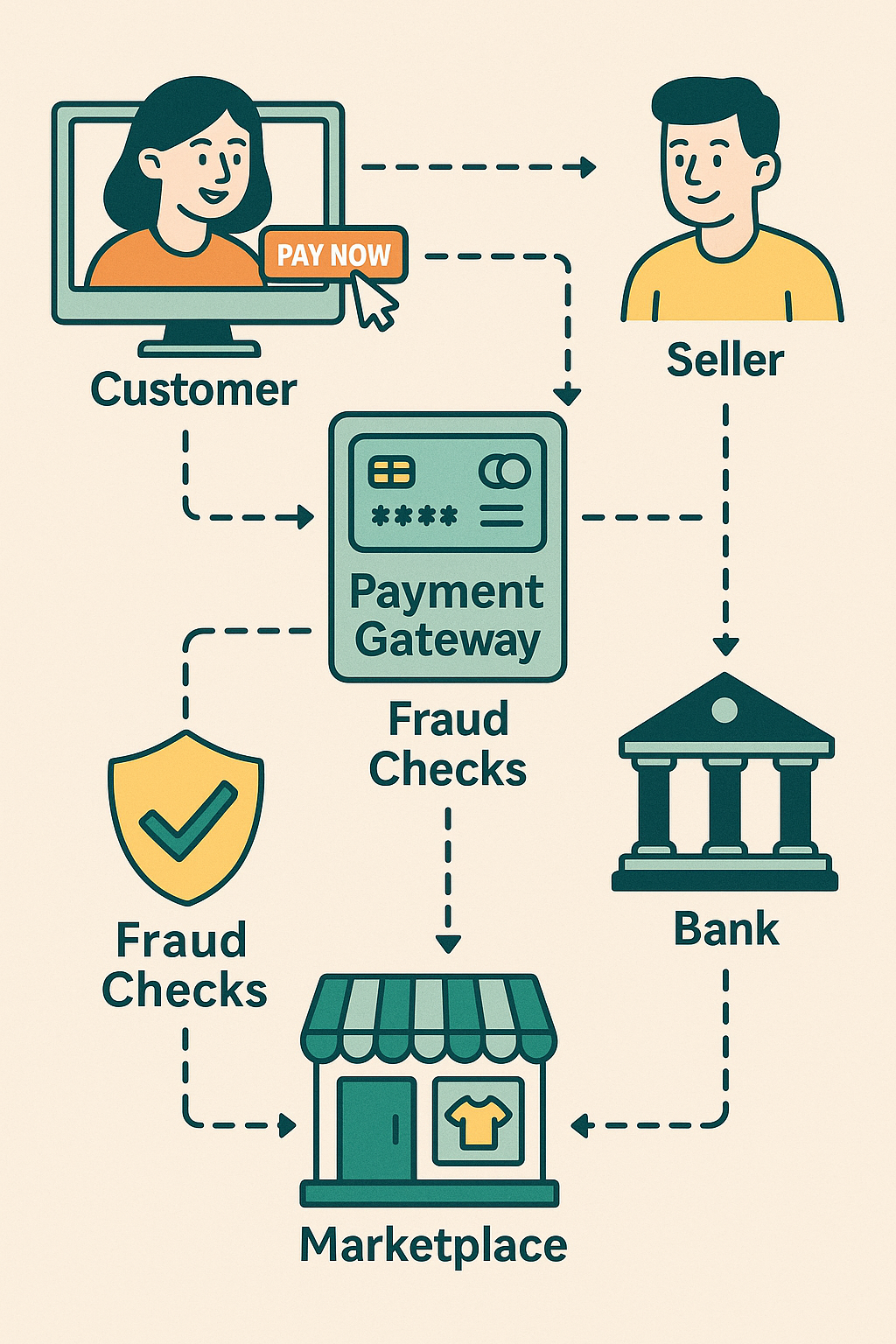
A payment gateway acts as a digital bridge between your customers and your platform’s financial institutions. When a buyer purchases an item, the gateway securely transmits payment data, verifies funds, and completes the transaction. In a multi-vendor marketplace, this system becomes more complex — funds must be split among multiple sellers, each with separate accounts.
The Role of Payment Aggregators
Payment aggregators like Stripe, PayPal, and Adyen handle large volumes of marketplace transactions by pooling merchant accounts under a master account. This setup simplifies onboarding but also increases exposure to fraud if not properly monitored.
Security Protocols and Compliance Standards
Modern gateways use PCI DSS compliance, SSL encryption, and tokenization to secure sensitive card data. Yet, even these advanced safeguards can’t fully prevent sophisticated fraud attempts without proactive monitoring.

Common Types of Payment Gateway Fraud
Card-Not-Present (CNP) Fraud
CNP fraud happens when a transaction is processed without the physical card present — typical in online sales. Fraudsters use stolen card data to make purchases that later lead to chargebacks.
Account Takeover (ATO) Attacks
When users reuse passwords or fall for phishing scams, hackers gain access to their marketplace accounts and make unauthorized transactions.
Chargeback Fraud (Friendly Fraud)
A customer completes a purchase, receives the product, then files a false dispute claiming they didn’t authorize the payment — resulting in revenue loss for sellers.
Refund and Phishing Scams
Fraudsters pose as customers seeking refunds or impersonate support staff to extract sensitive payment information.
How Fraud Impacts Marketplaces
The consequences of payment gateway fraud extend far beyond money loss:
Increased chargeback ratios can lead to gateway account suspension.
Damaged user trust and declining seller retention.
Higher operational costs for fraud investigation and dispute resolution.
Marketplaces that ignore fraud prevention risk long-term sustainability issues.
Top 10 Strategies for Payment Gateway Fraud Prevention in Marketplaces
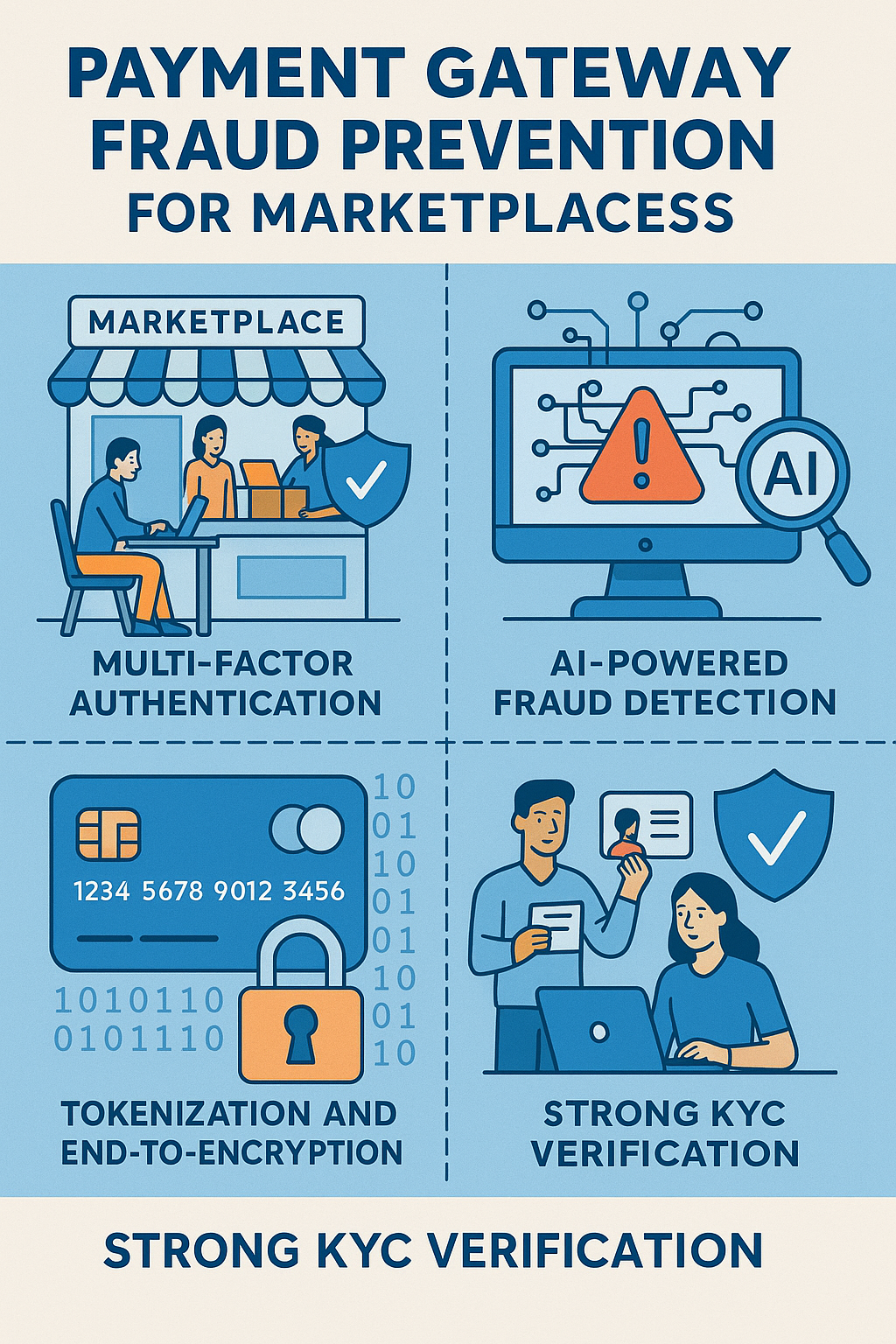
Multi-Factor Authentication (MFA)
MFA ensures only legitimate users access accounts by requiring additional verification such as OTPs or biometric scans.
AI-Powered Fraud Detection Systems
Machine learning models analyze patterns like IP addresses, transaction speed, and behavioral anomalies to detect suspicious activity in real-time.
Tokenization and End-to-End Encryption
Replace sensitive payment data with unique tokens and encrypt all transaction details to prevent data interception.
Transaction Velocity Checks
Flag accounts that make too many purchases or refunds in a short period.
Device Fingerprinting and Geo-Verification
Track the user’s device ID, IP, and geolocation. Transactions from unusual devices or countries can be automatically blocked.
Risk Scoring and Dynamic Rules Engines
Assign risk scores to transactions. High-risk ones can be reviewed manually or declined.
Strong KYC (Know Your Customer) Verification
Request identity documents, proof of address, and phone verification during seller onboarding.
Regular Payment Gateway Audits
Routine audits help ensure compliance and catch vulnerabilities before they’re exploited.
Transparent Chargeback Policies
Communicate clear refund and dispute processes to minimize fraudulent chargebacks.
Partnering with Trusted Payment Providers
Reputable providers like Ireowo, Kount, and Chargebacks911 offer advanced tools that adapt to evolving threats.
Emerging Technologies in Fraud Prevention
Innovations like blockchain-based payment systems, biometric verification, and AI-driven anomaly detection are shaping the future of secure marketplaces. These technologies offer transparency and traceability, drastically reducing fraud potential.
Real-World Case Studies: Marketplaces That Beat Fraud
Amazon employs advanced behavioral analytics and device tracking to detect unusual buying patterns.
Etsy uses machine learning models to monitor seller authenticity.
eBay integrates real-time fraud detection APIs to reduce chargeback rates by 30%.
These examples prove that proactive fraud prevention directly enhances trust and platform growth.
Best Practices for Marketplace Owners
Educate your users on safe transaction habits.
Regularly review transaction logs.
Keep software and APIs up-to-date.
Partner with cybersecurity experts.
Use sandbox testing before integrating new payment tools.
FAQs About Payment Gateway Fraud Prevention
Conclusion: Building a Secure Future for Digital Marketplaces
Fraud prevention isn’t a one-time effort — it’s a continuous process. By combining technology, policy, and education, marketplaces can protect their users, strengthen trust, and ensure sustainable growth. In today’s digital economy, proactive fraud prevention is the ultimate competitive advantage.